- Soma Mater's Newsletter
- Posts
- SOMA Newsletter
SOMA Newsletter
Soma Mater
November 24, 2025
Welcome to the SOMA MATER weekly newsletter.
At SOMA MATER, we specialize in delivering comprehensive research and advisory services with a focus on Food & Water Security and Net Zero Transition in the MENA Region. In order to support our subscribing clients in navigating these topics and understanding the regional narrative, we produce monthly Food and Water Security and Net Zero Transition Intelligence Reports, along with our in-depth analysis and insights.
This weekly newsletter highlights the top 3 stories from the past week in Food and Water Security and Net Zero transition, along with SOMA MATER's analysis and perspective.
How have MENA organizations translated internal ESG commitments into external transparency and measurable impact?
How has rainfall intensity changed in Sharjah, and what infrastructure challenges has this created?
What are AlUla's date production successes, and what challenges does Saudi Arabia's wider date industry face in expanding its global market presence?
Sustainably yours,
The SOMA team
#NetZeroTransition

ESG has become a strategic imperative in MENA, with organizations averaging 8 years of engagement and 99% prioritizing at least 2 pillars. Egypt leads with 62% of firms committing equally to all three pillars, while Jordan excels in internal communications, with 68% emphasizing workforce ownership. Yet a contradiction persists: firms report ESG performance nearly 9 times per year, but these disclosures remain largely internal, leaving external stakeholders in the dark.
Despite widespread tracking, 45% of organizations rely on ESG ratings and 42% on stakeholder feedback—prioritizing perception over quantitative analysis. Resource constraints hit Jordan hardest: 68% cite limited measurement capacity and 64% lack third-party support. Focus areas vary by market. Jordan leads in operational sustainability with 64% optimizing logistics and 57% adopting renewables, while the UAE and Saudi Arabia lead in social impact investments at 47% and 44%.
Motivations vary across the region. Kuwait and Oman chase long-term profitability, Saudi Arabia and Egypt respond to regulatory pressure, while Lebanon prioritizes ethical commitment. The verdict is clear: MENA has built the ESG foundation, but transformation requires bridging the chasm between internal action and external transparency, between stated ambition and verifiable impact. The region's competitive edge depends on coordinated, locally grounded strategies that turn rhetoric into measurable results.
SOMA’s Perspective:
The region appears to be measuring comprehensively but sharing selectively. This creates a regional information asymmetry where stakeholders are making decisions in the dark while firms sit on data that could shape investment, partnerships, and market positioning. The preference of relying on perception over data suggests we are more concerned with how ESG looks than what it actually delivers. Each country in the region leads in different areas—some in comprehensive commitment, others in internal engagement. Understanding which countries excel in each track is important.
Sources:
When It Rains, It Pours (159% More): Sharjah's Rainfall Story
#FoodandWaterSecurity

Studies reveal an escalation in rainfall intensity in the Emirate of Sharjah. Intensity–Duration–Frequency (IDF) curves show increases of 36.76% in Sharjah City, 26.52% in Al Dhaid, and 17.55% in Mleiha across all durations and return periods. This analysis utilized data spanning 1992 to April 2024. The mean maximum daily rainfall surged dramatically: Sharjah City jumped from 18.6mm to 53.3mm, Al Dhaid from 24.2mm to 65.3mm, and Mleiha from 61.9mm to 69.0mm.
The April 2024 floods exposed vulnerabilities in urban infrastructure. It revealed drainage systems incapable of managing intensified storm runoff, with Sharjah's road network flooding within three hours of rainfall. The rapid intensification of rainfall patterns is potentially linked to natural climate variability, anthropogenic climate change, and human interventions like cloud seeding—a program costing the UAE nearly $9 million annually in flight operations alone.
The role of cloud seeding is also important. Studies show rainfall in targeted areas increased by an average of 23%, with seeded storms generating 159% larger volumes. Mean daily rainfall in Sharjah City increased by 94% after cloud seeding implementation, while Al Dhaid and Mleiha saw increases of 60% and 67% respectively. The research shows that existing IDF curves are inadequate, and need to be updated on both national and regional levels (implementing regular five-year IDF curve updates). Cloud seeding, while securing water resources, must be evaluated within the comprehensive context of flood risk management.
SOMA’s Perspective:
Our region is planning infrastructure based on outdated rainfall curves while reality is shifting quickly. This mismatch means we're perpetually reactive rather than proactive—always behind the curve, literally. Here's the missed opportunity: increased rainfall intensity doesn't just mean flood risk, it means more water volume arriving in concentrated bursts. With proper infrastructure designed for capture rather than just drainage, this could be harvested water rather than runoff. We're transitioning to monsoon-like conditions, and our infrastructure must shift too—from systems built to shed water quickly to systems engineered to capture, slow, and store high-volume intermittent rainfall.
Sources:
Date Night: How Saudi Arabia's Sweet Export Is Splitting the Global Market
#FoodandWaterSecurity
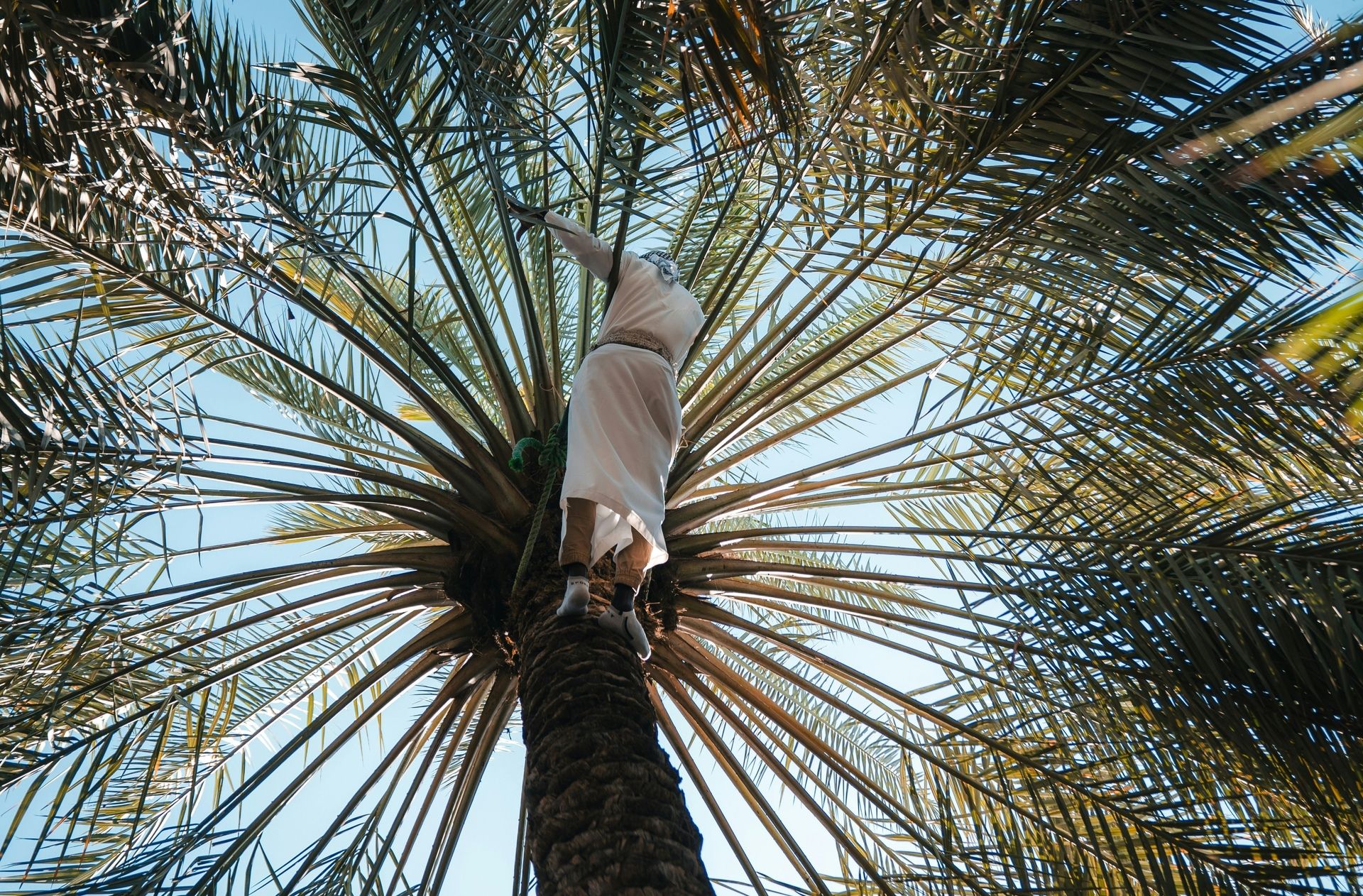
The recently-concluded AlUla Dates Festival showcased the importance of date palms for the region. AlUla's agricultural sector spans more than 15,000 hectares of palm farms housing 4.1 million trees that yield 170,000 tons of dates annually. The Barni variety dominates at 80% of the harvest, while the 2024 season delivered 1.7 million kg in sales and revenues exceeding SR8.8 million. The sector has trained 95 farmers and 250 students, accredited 250 farms, and treated over 120,000 palm trees.
Date production anchors Saudi Arabia's agricultural economy at 10% of total agricultural income, with annual output surpassing 1.5 million tons from 31 million palm trees. The Kingdom ranked second globally in 2021 at 16% of world production and commands 14% of global date exports. Yet there is split reality: while the UAE, Iraq, Pakistan, Palestine, Tunisia, and Iran outperform Saudi Arabia in the global market, Saudi dates hold comparative advantages in Africa, Asia, and the Organization of Islamic Cooperation, but struggle in American and European markets.
Studies show that countries like the UAE, Kuwait, Lebanon, Syria, and Yemen have boosted Saudi date exports (by 1.37%, 0.39%, 1.59%, 0.42%, and 0.58% respectively), while countries like Bahrain, Jordan, Oman, Palestine, and Qatar have dragged Saudi date exports down (by 0.59%, 0.58%, 1.16%, 2.02%, and 0.02%). Some challenges faced by the industry include low-quality marketing services, high costs, burdensome export procedures, inefficient by-product use, weak storage systems, and limited export revenues.
SOMA’s Perspective:
AlUla’s success story reveals that as a region, we possess agricultural treasures the global market has not fully explored yet. The broader picture shows untapped potential—our regional date varieties remain underexplored in Western markets with the majority fixated on the more traditional date varieties (like Medjool). This is an opportunity gap. The infrastructure exists, the production capacity is proven, and the quality is present. What's missing is the strategic positioning to transform regional potential into global demand for our diverse dates.
Sources:
SOMA MATER is writing Intelligence Reports on the topics of Food and Water Security and Net Zero Transition. If you’d like to know more, contact us through the link below: