- Soma Mater's Newsletter
- Posts
- SOMA Newsletter
SOMA Newsletter
Soma Mater
October 20, 2025
Welcome to the SOMA MATER weekly newsletter.
At SOMA MATER, we specialize in delivering comprehensive research and advisory services with a focus on Food & Water Security and Net Zero Transition in the MENA Region. In order to support our subscribing clients in navigating these topics and understanding the regional narrative, we produce monthly Food and Water Security and Net Zero Transition Intelligence Reports, along with our in-depth analysis and insights.
This weekly newsletter highlights the top 3 stories from the past week in Food and Water Security and Net Zero transition, along with SOMA MATER's analysis and perspective.
What are SOMA MATER’s October highlights and what will be addressed in our new podcast?
Which recent events has SOMA MATER attended on sustainable agriculture and food security?
How has the Grand Ethiopian Renaissance Dam (GERD) contributed to the Nile flooding in Egypt and Sudan?
Sustainably yours,
The SOMA team
CEO Letter from Sheikh Dr. Majid: SOMA on the Airwaves

October marks the start of event season, and we are excited to be back, sharing the stage with leaders in sustainability, food, and water sectors. It is a busy time trying to ensure we attend all the relevant events, but it is also a wonderful opportunity to connect with people across the MENA ecosystem.
This season is especially exciting because we are launching our podcast. I have been a big fan of podcasts—having previously ran a podcast company as a start-up. Since then, many have encouraged me to return to podcasting, and there is no better way to do it than focusing on the subject I love. The SOMA MATER podcast brings our friends, partners, and colleagues into deeper discussions you can share. Our goal is to make these conversations informative, get to the heart of the challenge, and demystify the complexity in the food and water security and sustainability space.
If this sounds interesting or exciting, click the link below and subscribe to catch the SOMA MATER podcast on your favorite streaming platforms. We hope you will enjoy the episodes. If you have thoughts to share or topics you would like us to explore, please reach out—we are glad to help address these critical challenges together.
Link to our podcast: https://tr.ee/MJzj_x1bm5
Where in the World is SOMA? Everywhere That ‘Maters’
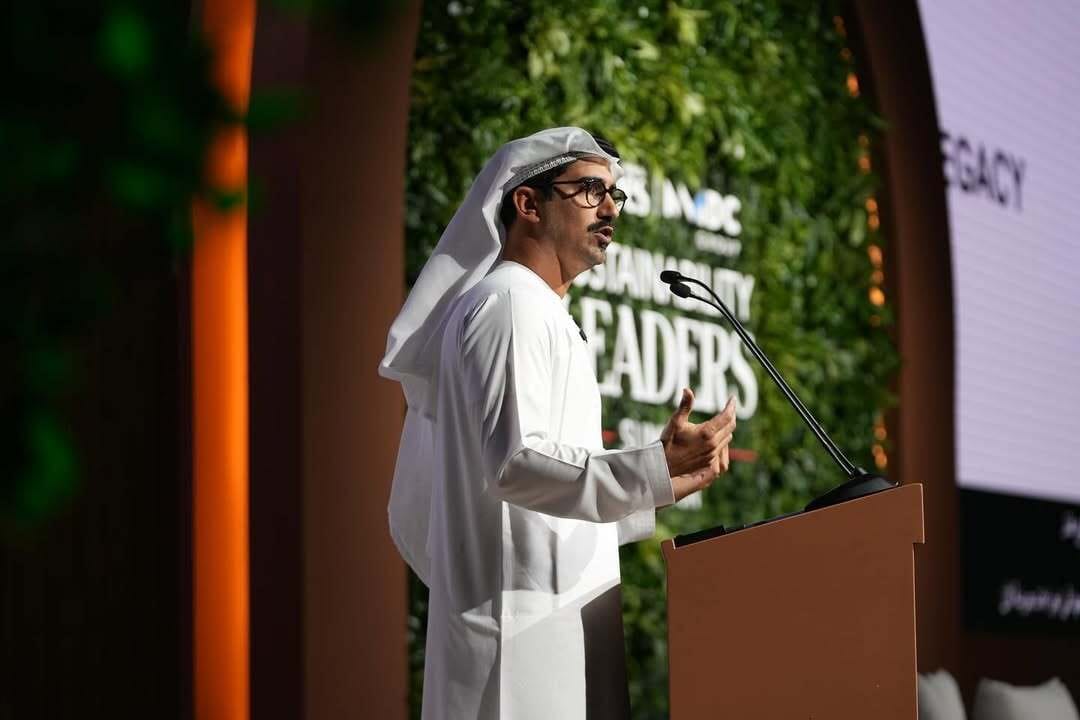
This past week, SOMA MATER's Sheikh Dr. Majid delivered a keynote address titled "From Palms to Possibilities—Advancing Food Security Through Sustainable Agriculture" at AgraME 2025. The event brought together global leaders in sustainable farming, controlled environment agriculture, aquaculture, and agri-innovation to discuss the region's evolving food security landscape.
The presentation highlighted critical challenges facing global food systems today. Despite these challenges, SOMA positioned the GCC as uniquely suited to pioneer solutions due to its long-term leadership vision, surplus energy transitioning to renewables, and commitment to stability. The talk showcased regional solutions including ICBA's halophyte systems, Silal's quinoa trials in saline conditions, Iyris's salt-water greenhouses, and Suwaidra Farm's aquaponic operations. With UAE research output growing 16-fold and Saudi Arabia's surging 320% over two decades, the region is establishing itself as an agricultural innovation hub.
SOMA MATER also attended the Forbes Middle East Sustainability Leaders Summit 2025, where Sheikh Dr. Majid explored the concept of legacy. From the Latin word "legatum," meaning "to leave a message," it embodies an idea of transmission across time. The talk unpacked 3 dimensions: sustainability, longevity, and legacy, emphasizing that as human lifespans extend, we must build for generations who will live longer with the consequences of our decisions. While we focus on sustainability and longevity, we often overlook the values and message we carry forward. Sheikh Dr. Majid urged leaders in the audience to leave a legacy within their own corporations.
Watch a clip from the Forbes Middle East Sustainability Leaders Summit 2025: https://www.instagram.com/reel/DP1vKxqjE5w/
Overflow: The Nile's Game of 'Who Controls the Tap?'
#FoodandWaterSecurity

Elevated water levels in the Nile have caused localized flooding across northern Egypt, particularly affecting the Nile Delta region. Egypt has blamed Ethiopia for the flooding, claiming the rising water levels stem from mismanagement of the Grand Ethiopian Renaissance Dam (GERD). The floods have submerged farmland and village homes, forcing residents to wade through waist-deep water.
This extends beyond Egypt's borders. In Sudan, villagers evacuated their homes due to Nile flooding, with the International Organization for Migration reporting approximately 100 households flooded in Khartoum. Egypt had to discharge water from its High Aswan Dam—over 2,000 kilometers downstream—due to inability to contain the volume flowing from Ethiopia. Ethiopia's actions are viewed as a direct threat to the lives and security of the peoples of downstream countries.
Ethiopia firmly disputed responsibility, asserting that the GERD (designed to double the country's electricity generation capacity) has helped reduce the flooding impact on Sudan. Egypt's food security challenges—with a population of 107 million, only 4.1% arable land, dependence on the Nile river, inflation rates of around 40% in 2024, and foreign debt expected to absorb 60% of the 2024/25 budget—illustrate how regional conflict, trade, and climate events interact within the food system. This dispute highlights the intensifying geopolitical tensions over Nile water management as upstream development collides with downstream water security concerns.
SOMA’s Perspective:
SOMA believes water and food security challenges represent a regional dynamic tied to a three-pronged paradigm: conflict, climate change, and economic volatility. The intersection of climate stress, population growth, and geopolitical tensions creates a scenario where water infrastructure becomes weaponized, threatening millions of livelihoods downstream. The current flooding illustrates unilateral water management decisions by upstream nations already having consequences on food production, displacement, and economic stability in downstream countries.
Sources:
SOMA MATER is writing Intelligence Reports on the topics of Food and Water Security and Net Zero Transition. If you’d like to know more, contact us through the link below: